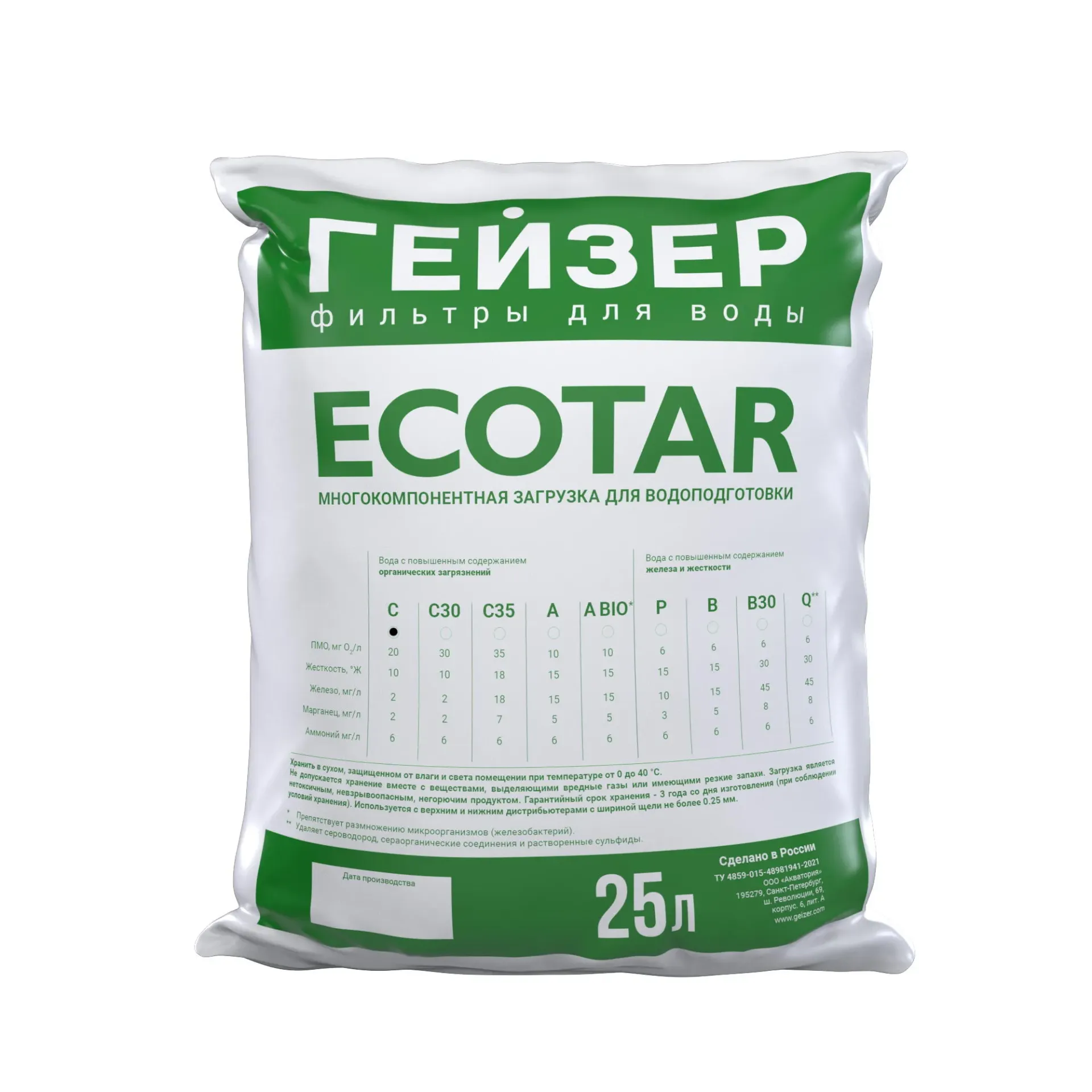

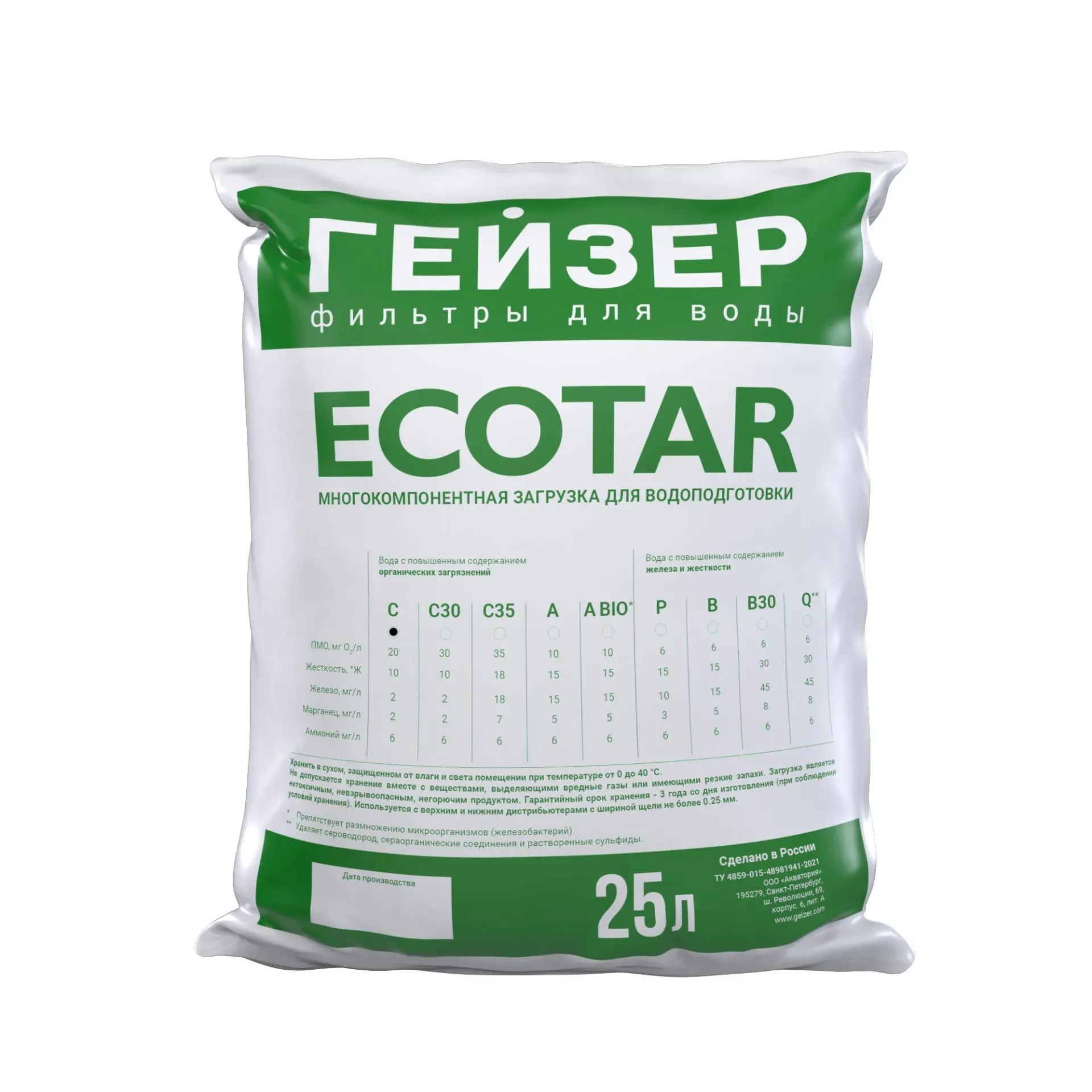
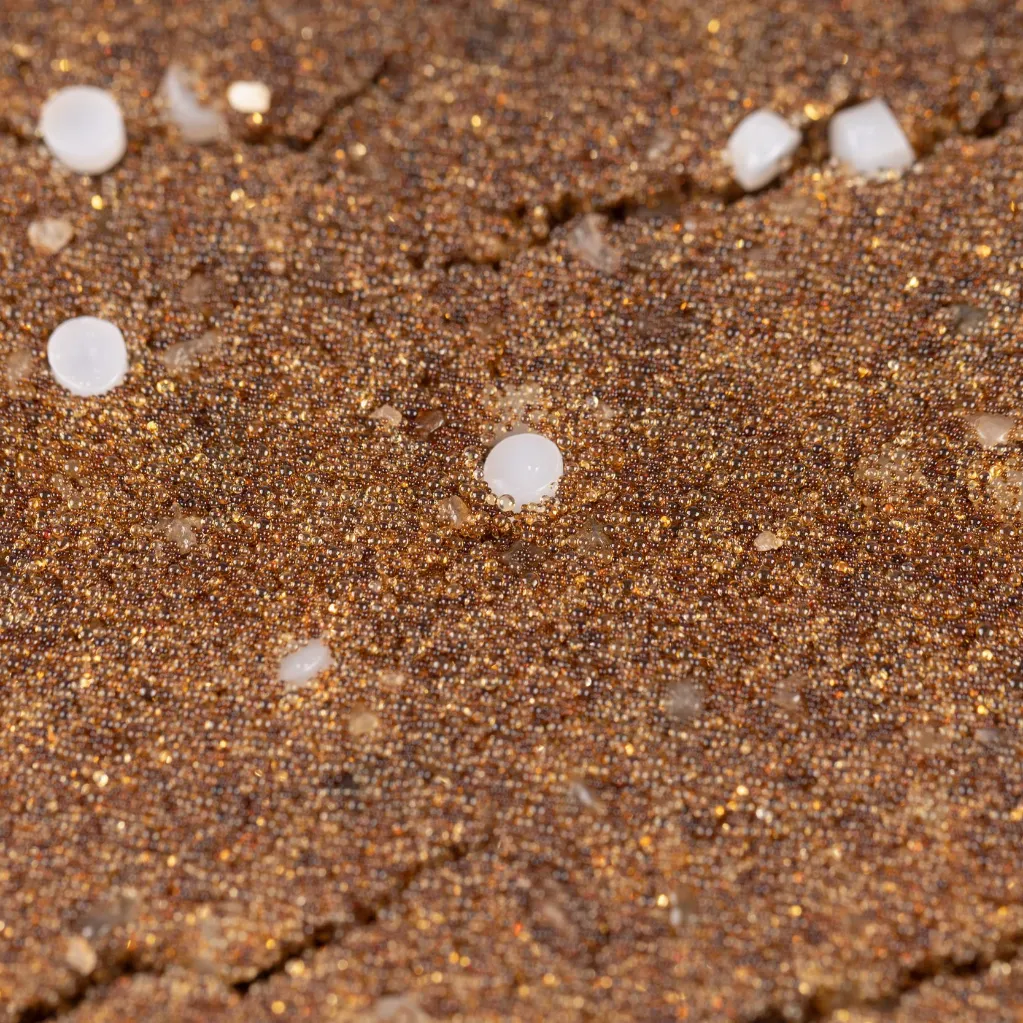
This advanced multi-component media incorporates a balanced blend of food-grade ion exchange resins with optimized varying bead sizes. The integration of fine-mesh black cation exchange resins significantly increases the bulk density and active contact surface area within the column, delivering double the operating efficiency in extracting scale-forming hardness and dissolved ferrous iron compared to conventional single-bed resins. Ecotar B is designed for deep well water that is initially transparent but turns yellow-brown and forms a precipitate upon standing. It works dynamically across a wide pH range (0–14) without requiring raw water pH correction. Due to its optimized bulk density, the media requires lower backwash flow rates to expand and reclassify, protecting the system from media loss and ensuring stable, long-term filtration performance. The entire composite bed undergoes simple and economical regeneration using a standard sodium chloride (NaCl) tablet brine solution.
Removal Capabilities:
Total Hardness Removal: Effectively extracts scale-forming calcium (Ca²⁺) and magnesium (Mg²⁺) ions to eliminate hard scale buildup, scale deposits during boiling, and protect plumbing systems.
High-Concentration Iron and Manganese Reduction: Captures extreme levels of dissolved ferrous iron (Fe²⁺) and divalent manganese (Mn²⁺), eliminating rust stains on sanitary ware.
Organic Matter Absorption: Functions as an auxiliary organic scavenger, removing baseline natural organic matter (NOM) and reducing residual water color.
Ammonium Retention: Securely traps dissolved ammonium ions commonly found in deep well water supplies.
Technical Characteristics of the Media:
Product Type: Multi-Component Universal Ion-Exchange Sorbent
Matrix Structure: Blend of fine mesh polystyrene crosslinked with divinylbenzene and acrylic matrices
Functional Group: Sulfonic acid / Quaternary and Tertiary Ammonium / Inert Polymer
Ionic Form during Delivery: Na⁺ form
Total Exchange Capacity: Minimum 1200 mg-eq/L (High bulk density composite mixture)
Moisture Content: 45–55%
Bead Size Distribution Range: Fine Mesh and Standard mix (Requires slot size of upper/lower distributors ≤ 0.25 mm)
Number of Uncracked Beads: Minimum 95% whole food-grade beads
Beads Particle Density: 1.20–1.30 g/mL
Bulk Weight / Shipping Weight: 840–980 g/L (52.4–61.2 lbs/ft³)
Standard Packaging Volume: 25-liter bags
Recommended Operational Conditions:
Maximum Operating Temperature: 40°C (104°F)
Operating pH Range: 0–14 (Operates without pre-treatment pH correction)
Minimum Bed Depth: 800 mm (2.6 ft)
Service / Fast Rinse Flow Rate: 10–20 m/h (4–8 gpm/ft²)
Co-Current Regeneration / Displacement Rinse Flow Rate: 2–4 m/h (0.8–1.6 gpm/ft²)
Total Rinse Water Consumption: 4–6 Bed volumes
Regenerant Type and Concentration: 8–12% NaCl brine solution (Standard tablet salt)
Salt Consumption for Regeneration: 100–150 g/L of media
Limits of Source Water Contamination:
Iron (Dissolved Ferrous): < 15 ppm (mg/L)
Manganese: < 2 ppm (mg/L)
Total Hardness: < 12 m-eq/L
Permanganate Oxidation (PMA): < 3 mg O₂/L
Ammonium: < 5 ppm (mg/L)
Turbidity: < 3 ppm
Free Chlorine: < 0.1 ppm
Hydrogen Sulfide: None
Total Dissolved Solids (TDS): < 2000 ppm
Please note: To ensure precise equipment design, proper calculation of the filtration cycle, and validation of raw water suitability, a professional water chemical analysis is highly recommended.